
Secret Lagoon in Iceland Travel Guide
Secret Lagoon in Iceland is located within the Golden Circle travel area near Reykjavík....
Learn More
Choose your currency
Get to know Iceland
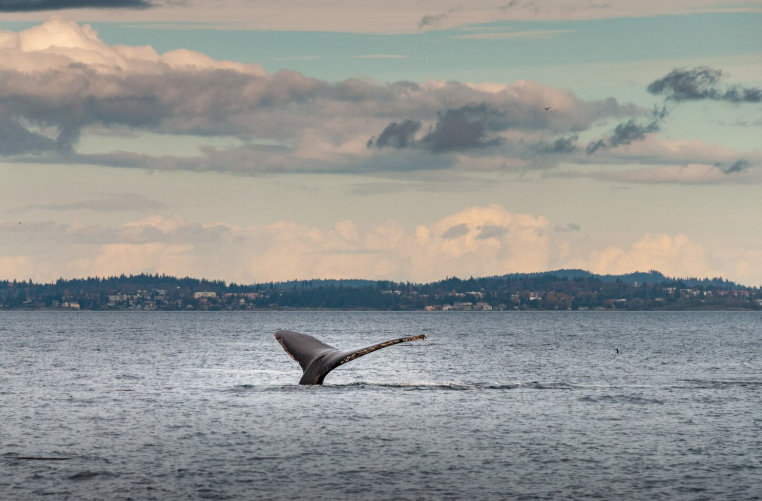
Iceland offers whale watching as a popular marine wildlife activity shaped by its North Atlantic waters, long coastline, and natural environment. Whale watching in Iceland sets clear expectations around where whales appear, when sightings are most likely, and how coastal areas support viewing across different regions.
Coastal regions and towns offer the best places to see whales in Iceland, with local conditions influencing visibility and access to whale watching areas.
Seasonal periods determine the best time to see whales in Iceland, as migratory species move differently between summer and winter. Whales in Iceland include different types, with their presence varying by location and season.
Travel in Iceland connects these coastal areas, making regional movement necessary to reach various whale watching locations. This is why many travelers rely on campervans to move efficiently between whale watching regions.
Iceland is one of Europe’s most concentrated regions for whale watching, because its position between Arctic and temperate North Atlantic waters concentrates whales close to shore. This marine environment supports more than 20 whale species, making whale watching in Iceland reliable and diverse.
In Iceland, whale season follows plankton and fish movements, bringing baleen whales, such as Blue whales, into northern waters from late spring through early autumn, while smaller species, minke whales and harbour porpoises, stay closer to shore, allowing frequent coastal observation.
Whales of Iceland can be observed during daylight hours and the midnight sun period from late May through early August, when extended summer light allows late-evening and overnight whale watching.
Among whale species in Iceland, orcas behave differently from those in many other regions and are often seen following local feeding routes near shore.
Whale watching in Iceland has a high whale sighting success rate, with tours often exceeding 90% during peak whale season. This reliability results from Iceland’s location near feeding routes, short distances between ports and offshore waters, and continuous monitoring of seasonal movement.
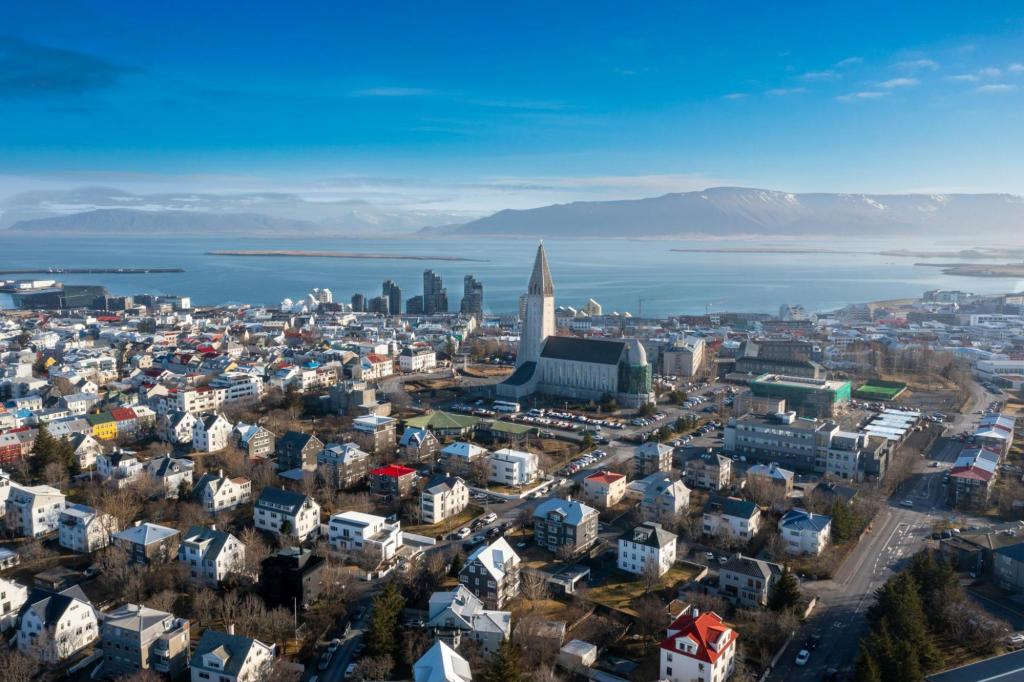
Húsavík is a northern coastal town in Iceland known as one of the most popular whale watching destinations. Whale watching in Húsavík offers high sighting rates because many whales feed in the coastal waters of Skjálfandi Bay, making different species easy to see.
Species seen in Húsavík commonly include humpback whales during the whale season, blue whales in summer, and orcas that occur seasonally.
Seasonal whale sightings in Húsavík include humpback and minke whales, with occasional blue whales and orcas. The summer season is the best time to visit Húsavík for whale watching, as calm seas and long daylight hours increase visibility of the whales of Iceland.
Whale watching in Húsavík is easy to access because whales are often seen close to shore. Húsavík’s coastal location and nearby campsites make it a practical stop for travelers using campervans, especially from May through September when driving conditions and daylight are most favorable.
Eyjafjörður is a long fjord in northern Iceland known for its protected waters that support regular whale activity and stable viewing conditions. Within the fjord, Akureyri and Hauganes serve as primary departure points for whale watching, offering access to the whale species of Eyjafjörður without the heavier boat traffic found in nearby Húsavík.
The best time to visit Akureyri for whale watching is during the summer season (June-August) in northern Iceland, when calm fjord waters allow for reliable tours and sightings. Whale watching in Akureyri is common during summer, and humpback and minke whales are regularly seen, while orcas are less common.
Hauganes lies farther north along the same fjord and offers whale watching from small local ports easily reached by campervan, allowing for fewer crowds and closer viewing in the scenic fjord environment.
Across the scenic fjord environment, seasonal sightings peak from late spring through summer, when humpback activity is most stable, and the sheltered waters support smooth navigation and longer observation times.
Ólafsvík is located on the Snæfellsnes Peninsula in west Iceland, placing the town within Iceland’s western whale watching area and directly along open Atlantic waters. Whale watching in Ólafsvík provides access to deep ocean waters near shore, making it possible to see larger, less common whale species, including sperm whales, with occasional sightings of orcas and rare blue whales during the summer season.
Whale watching tours in Ólafsvík operate as organized offshore excursions focused on open-sea whale activity rather than sheltered fjords, supporting deep-sea whale sightings in west Iceland.
Ólafsvík is also well positioned for independent travelers exploring the Snæfellsnes Peninsula by campervan. Direct road access from Route 54 supports vehicle arrival; roadside parking is available near the harbor area, and designated campsites are located within and around the town, allowing overnight stays close to the primary whale-watching zone.
Whales of the Snæfellsnes Peninsula are most reliably seen in summer, when marine visibility is better, and whale activity increases, making the best time to watch whales in Ólafsvík align with the main seasonal tours.
Reykjavík offers accessible whale watching in Iceland by combining an urban coastal location with direct access to Faxaflói Bay. As Iceland’s capital and main coastal city in western Iceland, Reykjavík is the easiest place to start a whale watching trip.
Whale watching in Reykjavík operates seasonally from the city harbor, where tours run multiple times daily during the summer months, making Reykjavík whale watching tours suitable for short stays or last-minute plans. Faxaflói Bay regularly supports sightings of minke and humpback whales. Orcas are occasionally seen when sea conditions, prey movement, and seasonal patterns align, providing reliable whale sightings near the city.
Reykjavík is known for frequent tours, clear seasonal planning, and convenient access to marine wildlife, making it a practical starting point. For travelers using campervans, Reykjavík also serves as a major logistical hub, with multiple campsites across the city, extensive public parking, fuel stations, supermarkets, and service access within a short drive of the harbor area.
Hólmavík is located in Iceland’s Westfjords, in a quieter coastal area known for regionally distinct whale-watching experiences. Tours from Hólmavík are offered by small, local operators that travel in calm coastal waters with low vessel traffic, creating quiet whale-watching experiences focused on observation rather than crowds.
These coastal tours support regular summer sightings of humpback whales, with orcas occasionally appearing in Westfjords waters when conditions align.
Seasonal tours in Hólmavík are primarily available in summer, when longer daylight hours and whales feeding closer to the coast increase the likelihood of sightings. This makes summer the best time for whale watching in the Westfjords and underscores Hólmavík’s role in offering a quieter, regionally distinct whale-watching option in Iceland.
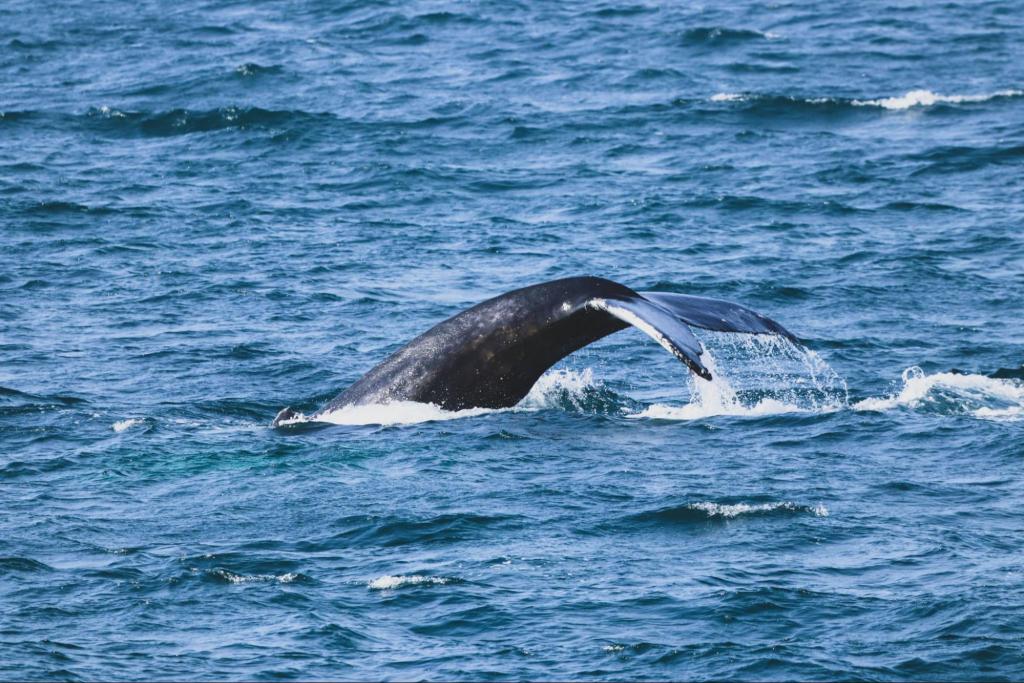
The best time for whale watching in Iceland is relative rather than fixed, as availability varies by season and depends on seasonal patterns, migratory movements, marine behavior, and visitor priorities such as daylight hours, sea conditions, and tour availability.
Seasonal whale watching differs mainly between summer and winter: summer generally offers longer daylight and higher tour frequency, while winter brings fewer departures and different encounter dynamics.
Summer is considered the primary season for whale watching in Iceland, with peak activity from June to August, making this period especially popular for travelers exploring Iceland by campervan. During this time, seasonal whale migrations, warmer sea conditions, and extended daylight from the midnight sun increase the chances of sightings and allow longer viewing periods.
The summer whale season is known for regular species activity. Humpback whales, minke whales, and orcas are regularly seen as they migrate to Icelandic feeding grounds during the summer months.
Whale watching tours operate at full capacity in June, July, and August. High tour frequency is available at key locations, including Húsavík, Akureyri, and Reykjavík, with multiple departures each day.
These ports are particularly convenient stops for travelers experiencing Iceland in summer by campervan, as they are located directly along major driving routes and allow easy integration of whale-watching excursions into self-drive itineraries.
Winter whale watching in Iceland continues through mid-November to March and remains available despite seasonal limits. During this period, tour availability is reduced, and species diversity is lower than in summer, but Iceland winter whale tours still operate, most reliably from Reykjavík harbor.
Winter whale sightings depend on species behavior and food availability; in Iceland, orcas are the most regularly observed near Reykjavík, while occasional humpback whales remain in coastal waters rather than fully migrate.
Iceland in winter offers a quieter, off-season whale watching with fewer boats, stark coastal views, and cold-weather whale sightings, which suits travelers using campervans who need flexible timing around winter weather and road conditions.
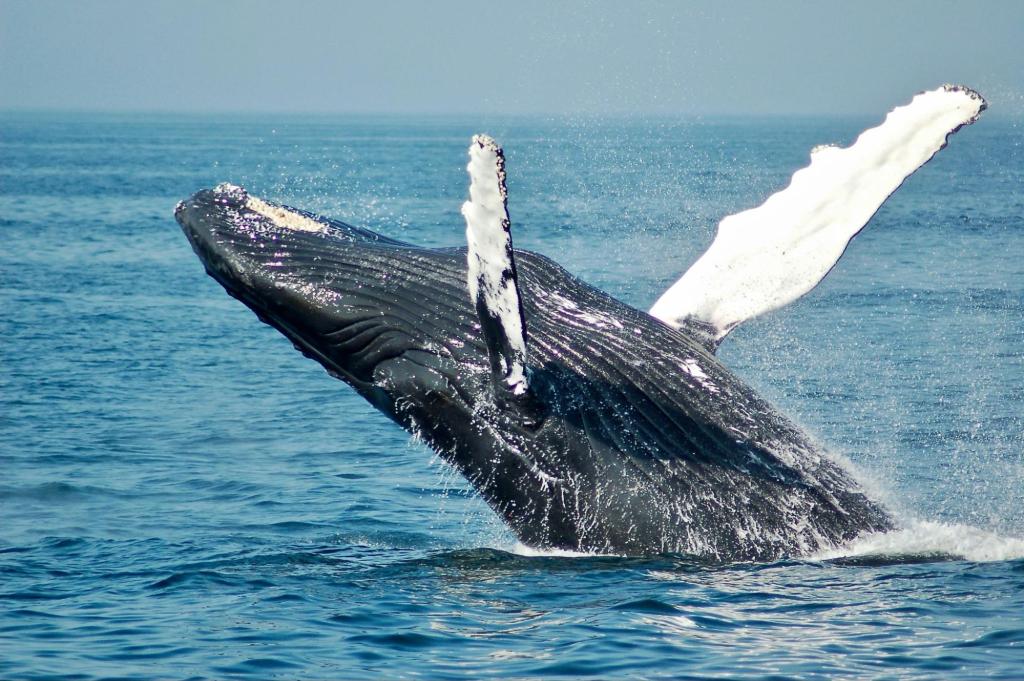
Humpback whales in Iceland are among the most frequently seen species during whale watching, making them a primary focus of the tour. Humpback whales are commonly observed from May to September, with increased feeding activity in Iceland’s northern waters during the summer season.
Humpback whales are most often seen around Húsavík and Eyjafjörður, with regular appearances also reported from Reykjavík on offshore routes.
During whale season, these species exhibit breaching, tail slapping, and extended surface displays, making them a highlight of whale watching in Iceland. The whales grow to 12–16 meters (39–52 feet) and weigh approximately 30-40 tons (66,000–88,000 lbs).
Minke whales are among the most common species seen during whale watching in Iceland. Sightings are most common during the main whale season from June through August, with additional activity possible in the shoulder months of May and September
One of the key reasons for their high sighting rate is their coastal behavior. Minke whales regularly feed in nearshore waters, which is why whale watching tours from Reykjavík frequently spot them in Faxaflói Bay, making them especially accessible from urban departure points.
In terms of size and behavior, Minke whales are a compact whale species, smaller and more elusive than humpbacks. Adults typically measure 7–10 meters (23–33 ft) in length and weigh up to 10 tons (22,000 lbs).
Orca, also known as Killer Whale, is among the most recognizable whales in Iceland, but they are not commonly seen.
In Icelandic waters, orcas behave differently from those in many other regions. They typically travel in smaller pods and follow herring-rich waters rather than fixed migration routes. As a result, their presence depends heavily on food availability.
Most orca sightings in Iceland occur near Snæfellsnes and the Westfjords, where seasonal herring movement brings them close to shore. Orcas are seen year-round, but sightings are more common in winter and early spring. They also appear along the North coast at times when food conditions are favorable.
Adult orcas measure about 6–9 meters (20–30 feet). Their bold black-and-white coloring and tall dorsal fin make them easy to recognize at the surface. They exhibit strong social behavior and coordinated hunting, which makes them especially remarkable to watch.
Orcas in Iceland have an unpredictable presence, so sightings on whale watching tours are never guaranteed. When they do appear, they are considered one of the rarest and most memorable encounters among the whales of Iceland.
Blue Whale is the largest animal ever to exist on Earth, growing to 25–30 meters (82–98 feet) in length and weighing up to 150–180 tons (330,000–400,000 lbs). In Iceland, blue whale sightings are rare, making them a rare and exceptional encounter in whale watching.
They appear most likely in northern Iceland, particularly near Húsavík and Skjálfandi Bay, and typically from May to early July. Blue whales are identified by their bluish-grey body and subtle surface behavior, typically showing slow surface glides.
Because their migration routes shift with feeding conditions, sightings are unpredictable, but seeing a blue whale in Iceland is widely considered a once-in-a-lifetime experience.
Fin whale is the second-largest whale in the world, reaching 20–25 meters (66–82 feet) in length and weighing up to 80 tons (176,000 lbs). In Iceland, fin whales are commonly seen during the summer whale season, especially in northern waters around the Húsavík coastline and Skjálfandi Bay.
The waters off Húsavík and across Skjálfandi Bay are among the most reliable locations for summer fin whale sightings.
This species is known for its streamlined body, tall dorsal fin, and fast swimming speed. Unlike humpbacks, fin whales tend to surface smoothly with long, gliding motions, creating quieter but striking encounters on the water.
Because fin whales are frequently seen in summer, they are one of the primary species on whale-watching tours in northern Iceland.
The sperm whale is the largest toothed whale and a deep-diving mammal that occurs rarely in Iceland. Sightings are most likely in northern Iceland, in deep offshore waters along the North Coast, especially off Húsavík, during specialized whale watching trips.
These species are known for extreme deep-diving behavior, diving to depths over 1,000 meters and staying underwater for up to 45 minutes, which makes surfacing appearances short and unpredictable.
The sperm whale is classified as a toothed whale with a large, square head used for deep-sea echolocation. It typically measures 15–20 meters (49–66 feet) and weighs up to 57 tons (125,000 lbs).
Because of their long dive cycles, whale watching tours may detect sperm whales acoustically more often than visually, making encounters highly location-specific and best described as a high-value, low-frequency sighting.
Pilot whale is a large, toothed whale species within the dolphin family that is occasionally seen in Iceland, but it is not a common sight on regular whale watching tours.
Pilot whales occur in offshore waters off Iceland’s West and North Coast, where sightings are rare, though more likely during the summer months. They are known for strong group behavior, often traveling in large pods of 20 or more, creating an impressive sight when they surface together.
These species exhibit dark coloration, a rounded, bulbous head, and long pectoral fins, making their pods easy to identify at sea. Adults measure up to 4-6 meters (13-20 feet) and weigh up to 3 tons (6,600 lbs), placing them among the largest dolphin species.
Harbour porpoises are Iceland’s smallest and most common cetaceans, measuring 1.4–1.9 meters (4.6–6.2 feet) and weighing around 60–75 kg (132–165 lbs). They are present year-round and occur frequently in coastal waters, fjords, bays, and near harbors all around Iceland.
Despite being very common, harbour porpoises are hard to spot because they move quietly, surface briefly, and create very little splash. Sightings are more likely in calm weather, especially in sheltered fjords and harbor areas where their subtle surface movement is easier to notice.

Whale watching in Iceland can be easily planned from Keflavík, the main arrival point for international visitors. From Keflavík, Reykjavík is the nearest whale watching base, about 50 km (45 minutes) away, with fully paved roads, making it a common starting point for travelers arranging a campervan rental in Iceland.
Reykjavík has several city campsites and convenient parking near tour harbors, making it suitable for Easy Auto or Easy Fun in summer, while winter conditions are better handled with Easy Clever 4×4. Reykjavík also acts as the main hub for reaching other whale watching areas.
From Reykjavík, Ólafsvík is about 196 km away (around 2 hours 45 minutes) along mostly paved coastal roads on the Snæfellsnes Peninsula, with municipal campsites nearby. Standard campers are suitable for summer, but a 4×4 is more comfortable in windy shoulder seasons or winter.
Northern whale watching destinations involve longer drives: Reykjavík to Húsavík is roughly 465 km (6–6.5 hours), and Reykjavík to Eyjafjörður (Akureyri/Hauganes area) is about 390 km (5 hours). Both areas offer campsites near harbors, but the distance and colder climate make the Easy Viking 4×4, Easy Luxury 4×4, or Easy Monster 4×4 better choices beyond summer.
Travel to the Westfjords from Reykjavík takes about 220 km (3.5–4 hours) and includes more remote sections with gravel roads. Campsites here are usually community-run, near town centers, and a 4×4 camper is recommended year-round due to changing weather conditions.
In summer, most whale watching routes are accessible with 2WD campers, but in winter (November–March), insulated 4×4 CampEasy campervans with winter tyres are essential for safe driving, stability, and comfortable overnight stays.




CampEasy Opening hours 09:00-16:00
Learn more about Self-Service
A minimum of 20 hours notice is required to use the booking engine. Click here to contact us directly for a booking less than 20 hours from now.
Change Date