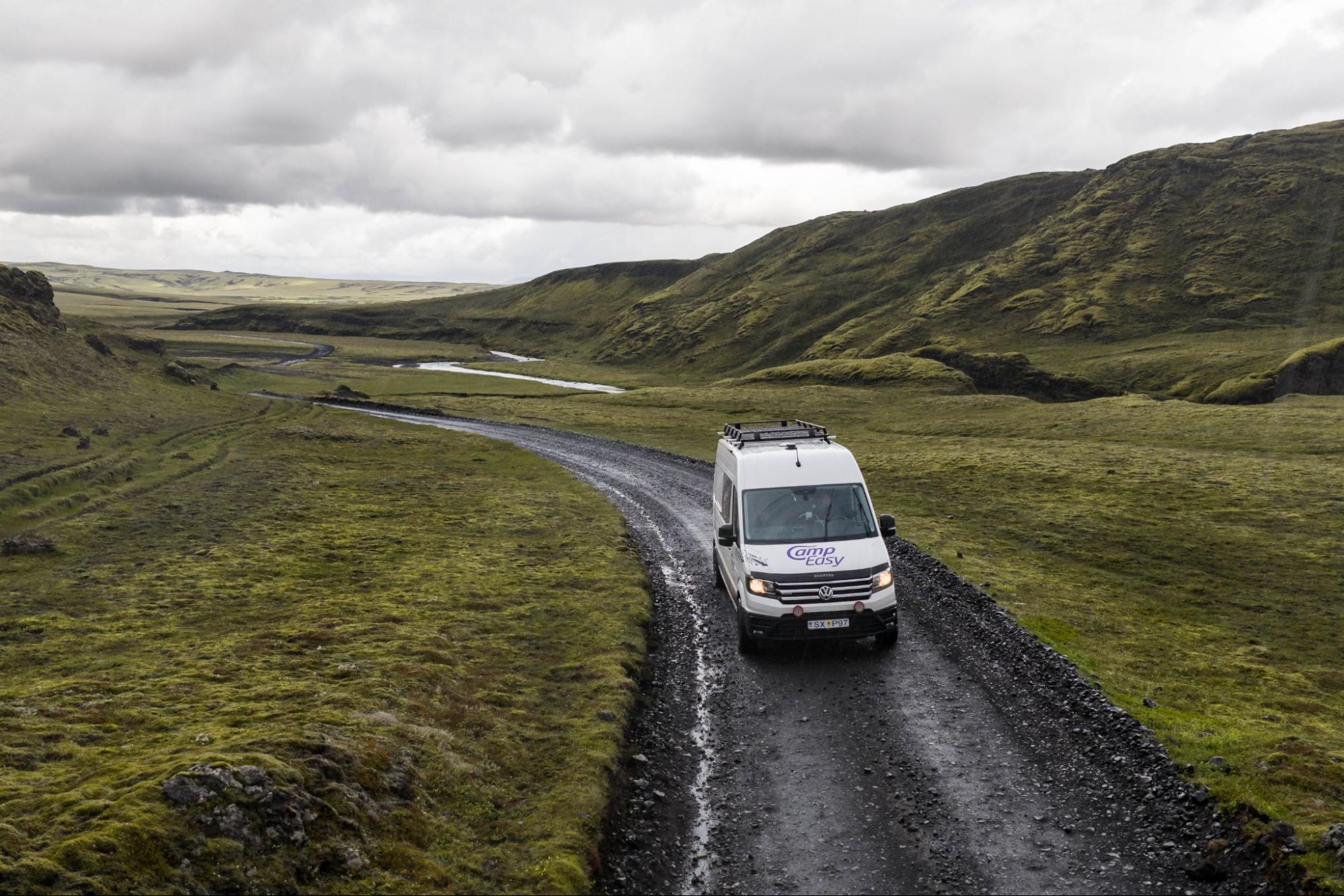
Secret Lagoon in Iceland Travel Guide
Secret Lagoon in Iceland is located within the Golden Circle travel area near Reykjavík....
Learn More
Choose your currency
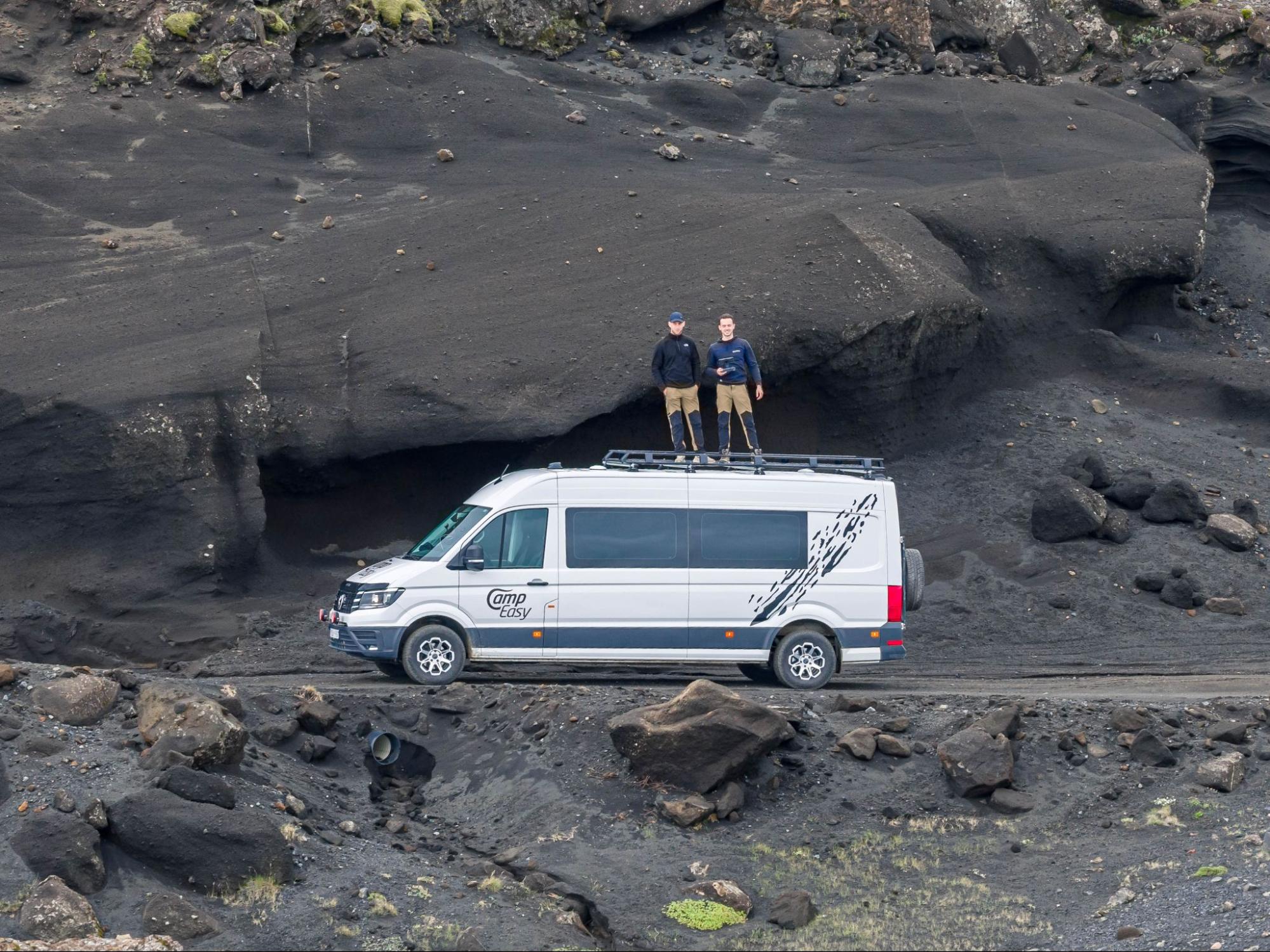
Get to know Iceland
Diamond Beach is a distinctive coastal destination in southeast Iceland. It is known for icebergs from the nearby Jökulsárlón glacier lagoon resting on black volcanic sand, forming a black sand and ice beach. The contrast between ice and dark sand makes Diamond Beach visually distinctive along Iceland’s South Coast.
Diamond Beach is reached by a campervan via Route 1 (the Ring Road). Ice movement, daylight duration, and road conditions vary throughout the year, determining the best time to visit Diamond Beach.
The surrounding environment features black sand and ice formations, with seasonal wildlife, including seals, along the shoreline. Activities and sightseeing options outline what to do at Diamond Beach, while nearby campgrounds, including Skaftafell, Svínafell, and Höfn, offer overnight stays.
Travel planning in this area requires selecting a suitable vehicle to rent a campervan in Iceland that matches the terrain, weather, and travel distance.
Diamond or Breidamerkursandur beach is an ice coast in southeast Iceland, where glacier ice meets a volcanic shoreline. Diamond beach is located near Jökulsárlón Glacier Lagoon and receives icebergs that calve from Vatnajökull, pass through the lagoon, and wash onto the coast. This process defines Diamond Beach as a glacier-fed beach shaped by active ice movement.
Diamond Beach consists of black volcanic sand covered by icebergs of varying size and age. Dense glacier ice melts, shifts, and breaks apart under tides, wind, and wave energy, causing the beach to change continuously. Ice distribution and shape can vary within hours as ocean conditions reposition the ice after each tide cycle.
The beach formed only after Vatnajökull retreated and Jökulsárlón expanded enough to connect with the ocean. This makes Diamond Beach geologically young and closely tied to ongoing glacial change.
The shoreline is divided into northern and southern sections by tidal flow, with ice often appearing blue or clear due to light refraction through compressed glacial ice.
Diamond Beach reflects Iceland’s fire-and-ice geology in one setting, where volcanic sand contrasts sharply with glacial ice. During winter, reflected light and aurora activity enhance its visual character.
Despite its constant change, Diamond Beach is easily accessible from Route 1 on the South Coast and stands as a clear natural expression of Iceland’s volcanic and glacial systems.
Diamond Beach can be visited in the Icelandic summer from late May through early August, when extended daylight improves visibility and access to the beach. The long light hours create low-angle, continuous illumination that enhances color separation: black volcanic sand absorbs light, while ice reflects and refracts it, intensifying blue tones and making edges, textures, and surface detail more defined along the shoreline.
The long light hours create low-angle and continuous illumination that enhances color separation: black volcanic sand absorbs light, while the ice reflects and refracts it, intensifying blue tones and making edges, textures, and surface detail more defined across the shoreline.
During summer, icebergs continue to flow from Jökulsárlón, keeping the beach in constant visual motion. Some ice melts quickly, while denser glacier ice persists longer, causing daily variation in ice volume and formations.
Summer is one of the best periods for photography at Diamond Beach. Extended golden hours and overlapping sunrise and sunset light produce soft illumination that highlights ice clarity, cracks, and reflections without harsh shadows. Seal activity also increases, with animals more often visible on icebergs or near the shore.
In Iceland in summer, access remains fully reliable. Route 1 stays clear, nearby campgrounds are open, and campervan travel is straightforward. Although visitor numbers increase, the wide shoreline disperses movement, keeping the beach visually open even during peak periods.
Diamond Beach in Iceland, from late November to March, features an ice beach shaped by cold temperatures and limited daylight. Larger, denser icebergs from Jökulsárlón Glacier Lagoon accumulate on the black sand, as slower melt preserves their structure and intensifies the deep blue and crystal tones caused by high ice density.
In winter, the sun stays low on the horizon, producing angled light that darkens volcanic sand while ice reflects and scatters light. This difference in how the surfaces handle light creates a strong visual contrast between black volcanic sand and clear glacier ice, which is especially visible in winter photos of Diamond Beach.
Winter tides from the glacier lagoon push heavier icebergs onto the shore, where they remain longer than in summer. As darkness sets in, the reflective ice and dark coastal surroundings enhance visibility of the Northern Lights, often mirrored across wet sand and icebergs. In Iceland in winter, seal activity also increases, with animals more often visible on icebergs or near the shore.
Despite limited daylight, the beach remains accessible via Route 1 in southeastern Iceland, and the winter experience is defined by ice behavior, visibility, and light conditions rather than by weather variations.
Breidamerkursandur beach in Iceland changes noticeably in spring and autumn. During these periods, ice movement from Jökulsárlón increases or recedes, and more black volcanic sand becomes exposed.
Iceberg flow from Jökulsárlón is more variable during this period. This creates alternating patterns of clear blue ice and dark volcanic sand, especially noticeable on the ice beach in September.
Iceland in spring brings shorter daylight than in summer, and the sun stays lower in the sky. These conditions produce longer golden-hour light and stronger contrast, making it easier to photograph Diamond Beach in early spring.
Wildlife behavior also changes during the shoulder seasons. Seals return near the lagoon outlet in spring and become less active as autumn progresses.
Access remains reliable throughout these months. Route 1 along the south coast stays open, nearby campgrounds continue operating, and campervan access to Diamond Beach in shoulder season remains practical.
Fewer visitors define this quiet season for visiting Diamond Beach. During this quieter period, reduced visitor numbers make it easier to observe tidal ice movement and changes in ice accumulation along Diamond Beach, without interference from summer crowds
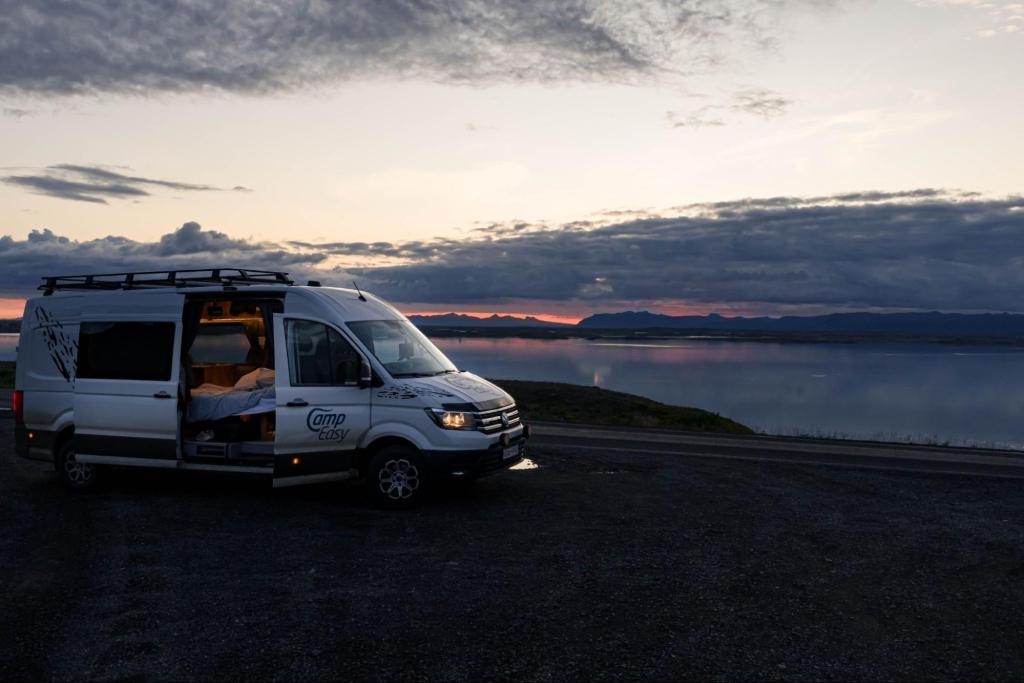
To reach Diamond Beach by campervan, follow Route 1 (the Ring Road) east from Reykjavík toward southeast Iceland. The drive covers approximately 370 km and typically takes 5–6 hours, depending on traffic, weather, and stops. The entire route remains on Route 1.
From Keflavík International Airport, the total distance increases to roughly 400 km, with an expected travel time of 6–6.5 hours after passing through Reykjavík and continuing east on Route 1.
Along the way, you pass key towns on Iceland’s south coast, including Vík and Kirkjubæjarklaustur. The town of Höfn lies farther east if you continue beyond the Jökulsárlón area.
Diamond Beach is located directly across Route 1 from Jökulsárlón Glacier Lagoon. Use Jökulsárlón as the primary reference point. Shortly after crossing the bridge over the glacial river, clearly marked turn-offs lead to the parking areas serving both the lagoon and the beach.
Route 1 is fully paved, well-signed, and maintained year-round. The parking areas are located directly off the road, are suitable for campervans, and provide access to Diamond Beach. In navigation apps, search for “Diamond Beach Iceland” or “Jökulsárlón” to reach the correct turn-off.
Diamond Beach is a black sand shoreline located at the mouth of Jökulsárlón Glacier Lagoon in southeast Iceland. The beach forms where glacial ice interacts with volcanic basalt sand along the coast.
Ice breaks off from Breiðamerkurjökull, an outlet glacier of the Vatnajökull ice cap, and drifts into Jökulsárlón Lagoon. From there, tidal movement carries ice chunks through the lagoon outlet and onto the nearby shoreline.
The ice is typically clear or lightly blue, which contrasts sharply with the dark volcanic sand. Sunlight reflecting off the ice creates the visual effect that gives Diamond Beach its name. Tides, wind, and temperature changes continuously reposition and melt the ice, causing the beach surface to change throughout the day as ice pieces appear, shift, and disappear.
At Diamond Beach, wildlife visibility is closely linked to glacial ice movement between the shoreline and the nearby Jökulsárlón Glacier Lagoon. Icebergs drifting out of the lagoon are carried onto the beach during changing tides, creating stable ice surfaces that animals use for resting.
Seals are the most frequently observed wildlife at Diamond Beach. They are commonly seen resting on ice chunks near the shore or swimming between the lagoon and the open ocean, following tidal cycles. Their presence is consistent year-round, particularly in areas with high ice concentration.
Seal visibility is highest during winter and the shoulder seasons, when lower visitor numbers and softer natural light improve observation conditions. Calm weather, low tides, and early morning or evening light provide the most favorable viewing and photography conditions, as exposed ice surfaces increase resting areas and make it easier to track seal movement.
Seabirds, including Arctic terns and skuas, may also appear along the shoreline or on the ice. However, seals remain the primary and most reliable wildlife presence at Diamond Beach.
Diamond Beach offers self-guided, nature-based activities shaped by glacial ice, black sand, and changing light. Walking along the shoreline reveals icebergs and ice chunks repositioned by tidal movement, and observing these natural changes forms the core interaction with the landscape.
Photography is a central activity because the contrast between clear or lightly blue ice and black volcanic sand creates strong visual definition. The ice reflects changes in the sky and water.
Standing near the shoreline, visitors can see new ice pieces appear and move as the tide rises and falls. Seals may occasionally be seen resting on ice near the waterline and should always be observed without disturbance.
Light and seasonality affect when these activities are most effective. Sunrise and sunset improve surface detail on the ice, while winter darkness allows the Northern Lights to appear above the beach.
In summer, ice chunks reach the shore more often; in winter, ice builds up along the beach. The beach has no facilities and no guided services, so all activity remains slow, quiet, and self-directed.
Across the road, Jökulsárlón Glacier Lagoon offers optional boat tours, while Diamond Beach itself is best explored by walking, watching, and photographing the ice-covered shoreline.
Travelers visiting Diamond Beach in a campervan will find several campgrounds nearby with campervan-friendly sites along Route 1 in southeastern Iceland. These locations offer practical overnight options for travelers exploring the glacier beach area while following the Ring Road.
To the west of Breidamerkursandur beach, Skaftafell Campground and Svínafell Campground are located along Route 1 near the glacier lagoon region. Further east, Höfn Camping is located along the Ring Road and is commonly used by campervan travelers approaching Diamond Beach from the eastern side of the south coast.
Each campground serves as a convenient base for visiting Jökulsárlón Glacier Lagoon and the surrounding black-sand coastline.
Skaftafell Campground is located within Vatnajökull National Park, along Route 1 in southeast Iceland, west of Diamond Beach. Its position on the Ring Road places it directly on the main travel corridor used by campervan travelers moving between Iceland’s southern glacier regions and the glacial lagoon coastline.
The campground is a common overnight stop for visitors exploring Vatnajökull’s glacial landscapes. It connects Route 1 to glacier-hiking routes and national park terrain, while also providing a direct eastward route to Jökulsárlón and Diamond Beach.
Situated within a protected national park, the campground serves as a practical year-round base for campervan travel along the continuous glacier-to-coast route in southeastern Iceland.
Svínafell Campground is a small, privately operated campground near Route 1 in southeast Iceland, located west of Diamond Beach within the Vatnajökull glacial region. It serves campervan travelers as a quieter overnight base near Skaftafell, commonly used to access glacier-adjacent trails and continue east toward Jökulsárlón and the Diamond Beach corridor.
Positioned directly on the Ring Road, Svínafell Campground functions as a convenient stop for south-coast campervan routes between Vatnajökull access points and Diamond Beach.
Höfn Camping is located in the coastal town of Höfn, along Route 1, east of Diamond Beach and the Jökulsárlón area. It lies beyond the main glacier beach corridor, where Ring Road travel continues toward Iceland’s eastern regions.
The campground is commonly used as an overnight base by campervan travelers after visiting Diamond Beach, Breiðamerkursandur, and nearby glacier lagoons, before continuing east or returning along the Ring Road.
With its urban setting, Höfn Camping serves as a convenient hub for camper-based travel in southeastern Iceland, linking the glacier coastline with longer Ring Road routes beyond the Vatnajökull region.

The best camper for visiting Diamond Beach in Iceland is one that suits the south-coast driving conditions, seasonal weather, and Ring Road access. Although Diamond Beach is accessible via paved Route 1, long travel distances, strong winds, and rapidly changing weather make insulation, heating, and steady driving essential.
Travelers driving only the Ring Road during summer can use a 2WD campervan, while winter travel or routes requiring greater flexibility call for a 4×4 campervan with AWD for improved traction and stability.
These considerations play a key role when choosing a campervan rental Iceland provider, as they offer options for different seasons and route plans.
Within the CampEasy fleet, specific camper models are better suited to different travel conditions:
Seasonal conditions determine the optimal choice. Snow, ice, and limited daylight during winter and the shoulder seasons make a 4×4 the safer option, while summer conditions allow reliable access to Diamond Beach with a 2WD campervan.
For multi-day travel along the South Coast between glacier lagoons, campsites, and Diamond Beach, camper size, heating, and interior comfort remain key considerations.




CampEasy Opening hours 09:00-16:00
Learn more about Self-Service
A minimum of 20 hours notice is required to use the booking engine. Click here to contact us directly for a booking less than 20 hours from now.
Change Date