
Secret Lagoon in Iceland Travel Guide
Secret Lagoon in Iceland is located within the Golden Circle travel area near Reykjavík....
Learn More
Choose your currency

Get to know Iceland
Iceland’s signature stop on the Golden Circle route is Silfra fissure snorkeling and diving in Þingvellir National Park, and it’s easy to visit by tour or self-drive campervan.
The Golden Circle route is one of the most popular driving routes in Iceland, and Þingvellir National Park is one of its main stops. Silfra is located inside the national park, so visiting it fits naturally into a Golden Circle self-drive day. You can book a guided tour with pick-up from Reykjavík, or you can drive your campervan to Þingvellir and park near the tour meeting area.
Snorkeling in Silfra means floating in extremely clear glacial water between two continental plates. Diving in Silfra lets certified divers go deeper and explore more of the fissure with proper equipment and buoyancy control. All visits are done with licensed guides, so you’ll need to book in advance, whether you choose to snorkel or dive.
Silfra itself has several sections the tour passes through, each with slightly different depths and underwater views. It’s not a long hike or a full-day trek, which makes it easy to combine with other Golden Circle stops on the same day.
This guide covers what Silfra is, why it’s famous, how snorkeling and diving work, what kind of diving certification you need, and how to plan your visit as part of a Golden Circle campervan trip. You’ll also learn about parking, access, and the best time of year to go, so you can confidently add Silfra to your Iceland road trip plan.
Silfra is a freshwater fissure in Þingvellir National Park, Iceland, formed as a geological rift between continental plates. It sits within one of Iceland’s most important protected areas and is part of the wider landscape that defines the country’s volcanic and tectonic identity.
As a natural geological feature, Silfra is used for in-water activities such as snorkeling and diving. Visitors enter the clear glacial water to float or swim through the narrow rift, moving between rock walls that shape different sections of the fissure.
Because it is located within Þingvellir National Park, Silfra is commonly included in a visit to Þingvellir or a Golden Circle self-drive day, as well as in campervan trips around southwest Iceland.
Silfra in Þingvellir National Park, Iceland, is defined by its cold, crystal-clear water and tightly regulated diving limits.
Silfra is famous in Iceland for its crystal-clear snorkeling and diving in Þingvellir National Park, where visitors move through water inside a visible rift zone. The fissure lies between tectonic plates, so the landscape swimmers pass through is part of the geological boundary shaping the park.
This setting gives Silfra a reputation that goes beyond typical dive sites. Few places allow travelers to experience a continental plate boundary underwater, making the activity both a natural experience and a geological encounter.
Silfra is located in Þingvellir National Park in southwest Iceland. It sits within one of Iceland’s most important historic and geological areas, inside the protected landscape that forms part of the country’s volcanic rift zone.
Silfra is about 47 km (29 miles) from Reykjavík, roughly a 45–50-minute drive, and about 100 km (62 miles) from Keflavík International Airport, about 1 hour and 15–20 minutes by car. Its position between Reykjavík and the rest of the Golden Circle makes it easy to include in a southwest Iceland travel plan.
Within Þingvellir National Park, Silfra lies near the main visitor zones and walking paths, set within the broader lake and lava landscape that defines the area.
Silfra is divided into four main sections that form a short underwater route rather than a single swimming spot. As you move through the fissure, the landscape changes naturally from one area to the next.
The route begins with Silfra Big Crack, also known simply as the Silfra Crack. This is the narrowest part, where the rock walls feel close on either side, and the “between the tectonic plates” experience feels strongest.
Silfra Big Crack opens into Silfra Hall, where the fissure widens slightly, and the water flow feels calmer. Here, you can see more detailed rock formations and subtle colors in the underwater walls.
Silfra Hall then widens into Silfra Cathedral, the broadest and most open stretch of the route. This section is known for its wide blue views and for natural light filtering through the clear water, creating a sense of expansiveness during a swim or dive.
The route ends in Silfra Lagoon, a shallower and gentler area where the water opens up and the experience gradually comes to a calm finish.
Most snorkeling and diving tours follow this natural order: Big Crack to Hall to Cathedral to Lagoon, within Þingvellir National Park, Iceland.
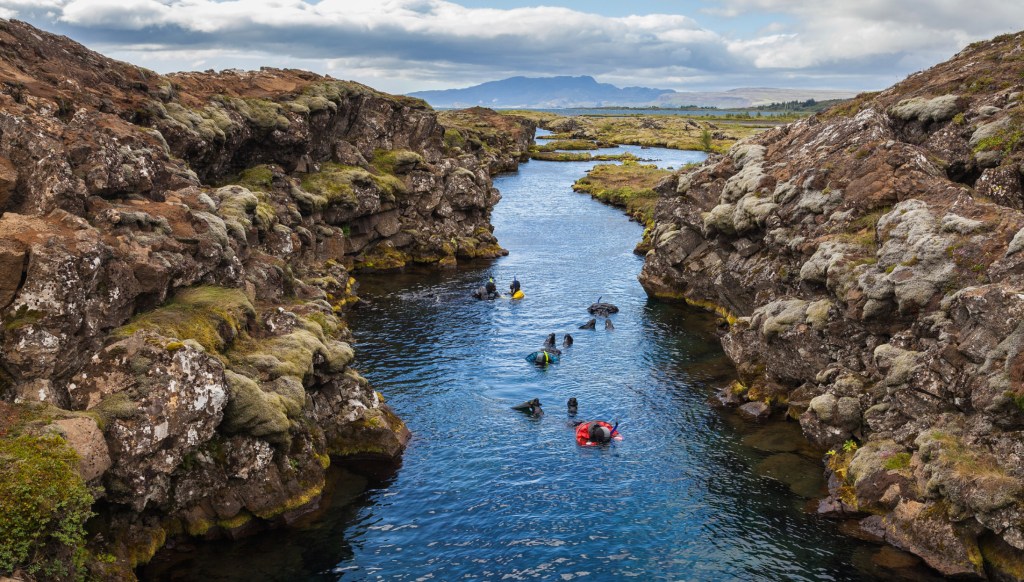
Snorkeling in Silfra is a guided, surface-level float-through experience in Þingvellir National Park. Instead of swimming laps, you move slowly with the current through clear freshwater, floating between rock walls inside the fissure.
Snorkeling in Silfra takes place in very cold, exceptionally clear glacial water. The visibility is unusually high, and the water temperature stays near freezing year-round. Because of these cold conditions, thermal protection is essential for comfort and safety.
Silfra snorkeling involves staying on the surface in a controlled, calm group setting, following a natural route through the fissure’s different sections. The experience feels peaceful and steady rather than physically demanding, but the cold water defines how it is done and what you need to wear.
Because the water is so cold, three practical decisions matter before you go: whether you’re eligible to take part, whether you’ll snorkel in a dry suit or a wetsuit, and what thermal layers you should wear underneath.
You can usually snorkel in Silfra if:
You usually cannot snorkel in Silfra if:
Snorkeling in Silfra must always be done with a guide; you cannot enter the fissure alone. If you are unsure about any requirement, confirm directly with your chosen operator in Iceland before booking.
Once you know you’re eligible, the next decision is whether you’ll snorkel in a dry suit or a wetsuit, and how to layer for warmth.
For Silfra snorkeling in Iceland, the water is very cold, so dry suits are the standard choice for comfort. Operators sometimes offer wetsuits, but only when conditions and participant fit allow.
A dry suit keeps you dry. Warmth comes from the thermal layers you wear underneath, and it usually feels warmer overall, though it can feel slightly bulky.
In a wetsuit, warmth comes from the thickness of the neoprene, which traps a thin layer of water against your body. It can feel more flexible and freer to swim in, but most people feel colder over time compared to a dry suit.
Under a dry suit, wear a moisture-wicking base layer, a warm insulating mid layer, and thick wool or thermal socks. Choose synthetic fabrics or merino wool that keep heat in and move moisture away from your skin. Avoid cotton, jeans, or bulky clothing, because they trap moisture and can make the suit uncomfortable or colder.
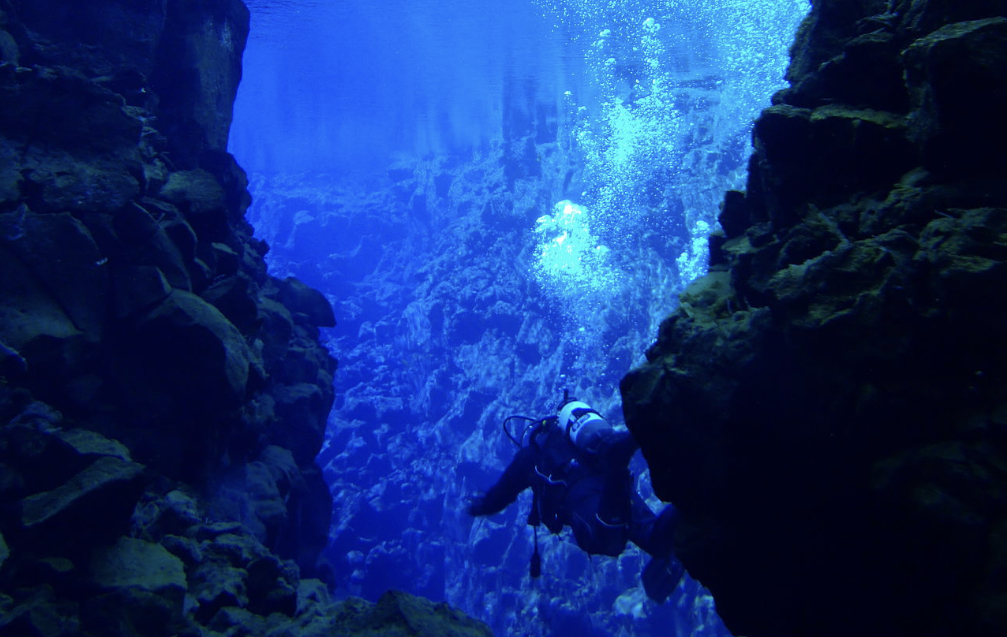
Diving in Silfra is a guided scuba experience that takes place fully underwater in Þingvellir National Park. Unlike snorkeling, which stays at the surface, scuba diving in Silfra involves descending below the surface and moving through the fissure while managing your breathing, equipment, and depth.
Diving in Silfra is more technical than snorkeling because you must manage buoyancy, monitor your depth, and handle scuba equipment throughout the dive. The experience depends on calm control rather than speed, and closely supervised groups are guided to maintain safety in the fissure.
Before planning a dive in Silfra, three checks matter most: whether you have the required scuba certification, whether you have enough dry suit experience and buoyancy control, and what depth you can expect to dive to within park limits. First, it’s important to confirm what certification you need to dive in Silfra.
You’ll need:
Next, it’s important to understand what counts as sufficient dry suit experience and why buoyancy control is essential for diving Silfra.
Silfra diving requires either dry suit certification or around 10 logged dry suit dives, with recent experience within the last 2 years often expected.
Good buoyancy control means you can:
Safe diving in Silfra depends on stable buoyancy because the visibility can create a false sense of depth and distance. If a diver cannot maintain control, the guide may stop or cancel the dive for safety reasons. There is also a short walk in full gear to reach the entry point, so a basic level of physical readiness helps.
Next, it’s useful to understand how deep Silfra dives actually go within park limits.
For Silfra diving, the maximum allowed depth is 18 meters (60 feet), and most dives typically stay shallower, around 10 meters (32 feet). These limits are set within Þingvellir National Park to ensure safe recreational diving conditions.
Planning and booking a Silfra tour in Iceland is the key step that turns your interest into a confirmed experience in Þingvellir National Park. Because Silfra operates under strict safety and park regulations, tours must be booked in advance rather than walk-in.
Start by choosing your activity: snorkeling or diving. Then confirm that you meet the requirements for that activity, including swimming ability for snorkeling or diving certification. Your booking depends on the activity you choose, your eligibility, and tour availability on your travel dates.
Next, compare operators based on what the Silfra tour includes. Most tours include supervision by a guide, necessary equipment, and safety briefings. Availability can vary by season and weather conditions, and tours may be adjusted or canceled if safety standards are not met.
Once you choose an operator and time slot, book your spot in advance, especially during peak travel months in Iceland. Booking locks in your schedule and allows you to prepare properly for the conditions at Silfra.
After booking, plan your arrival timing and make sure you understand how you will reach Þingvellir on the day of your tour. Your arrival depends on one final choice between joining a pick-up option or arranging your own self-drive transport.
You can’t enter Silfra alone. You must snorkel or dive with a buddy, and most travelers in Iceland use a guided tour in Þingvellir National Park. Solo entry is prohibited for safety reasons.
Most visitors join a guided tour. This is the simplest option, as the operator provides supervision and equipment while ensuring all park rules are followed.
It is possible to access Silfra without joining a standard guided tour, but only if you secure the proper permit, bring suitable equipment, and still dive or snorkel with a buddy. Even in that case,
For the Silfrar, you can choose to join a pick-up tour or drive yourself by using a campervan. Both options bring you to Þingvellir National Park, but they differ in convenience and flexibility.
A pick-up tour optimizes convenience. You meet the operator in Reykjavík or a designated location, avoid driving responsibilities, and follow a fixed schedule. This option works best if you prefer simple logistics and no planning around road conditions.
A self-drive arrival optimizes flexibility. You control your timing and can combine Silfra with other Golden Circle stops. However, you manage your own schedule, weather awareness, and arrival planning.
Visiting Silfra by campervan in Iceland fits naturally into a self-drive Golden Circle day in Þingvellir National Park. Instead of joining a fixed transport schedule, you control how you arrive at your Silfra tour and how the rest of your day flows.
Most travelers who visit Silfra by campervan still join a booked snorkel or dive tour; the difference is that you manage your own arrival and timing. Choosing a reliable vehicle matters, and using a trusted campervan rental in Iceland can make the self-drive part of your Silfra day smoother and more predictable.
With that in mind, the first step is understanding how to drive to Þingvellir on the Golden Circle and time your arrival correctly.
To reach your Silfra tour, drive to Þingvellir National Park along the Golden Circle route in Iceland. Silfra is located inside the park, making it an easy stop on this popular driving loop.
Driving to Þingvellir in a campervan is usually straightforward because the main Golden Circle roads are paved. Before you set off, check road conditions and weather forecasts, confirm your campervan basics such as fuel level, windshield washer fluid, brakes, and visibility, and allow extra time for unexpected delays.
Your Silfra tour day depends on arriving on time, so plan a buffer before your scheduled check-in. Traffic, weather changes, or short stops along the way can affect your timing, and arriving calmly makes the experience smoother.
Once you reach Þingvellir, the next step is to find parking and learn how to access Silfra tours.
For Silfra tours at Þingvellir National Park, you are required to pay the Þingvellir parking fee before leaving your vehicle. This fee is usually not included in your tour booking, so keep proof of payment.
Park at P5 (Valhöll) for Silfra snorkel and dive access. This is the designated parking area for visitors joining Silfra tours.
The area often referred to as the “Silfra car park” is typically restricted for commercial or tour vehicles. As a self-drive guest, you park at P5 and walk approximately 400 meters (about 5 minutes) to the Silfra meeting point.
Plan to arrive around 15 minutes early to allow time for check-in and meeting your guide so your tour can start smoothly.
Winter campervan travel in Iceland depends heavily on wind and road conditions, especially when driving to Þingvellir on a Golden Circle day.
Before driving, check official sources such as Umferdin.is (formerly road.is) for road conditions and closures, vedur.is for weather alerts and SafeTravel updates. Wind is often the biggest risk for campervans. SafeTravel guidance flags wind speeds of 15 m/s or higher as a threshold for when campervans and motorhomes should avoid driving.
If strong winds, ice, or road closures are forecast, postpone your self-drive and consider adjusting your Silfra tour date or switching to a pick-up option. Slow down more than you think necessary, leave extra time for arrival, and always hold campervan doors firmly when opening them in windy conditions.
Your Silfra tour day requires a buffer for winter arrivals, and safe driving always comes before sticking to a schedule. If conditions change quickly, adjust your plan rather than pushing through unsafe roads.
With driving and access covered, you can now shape your campervan day around Silfra and the rest of your Golden Circle route.
Silfra + Þingvellir half-day loop works best for a campervan self-drive when your Silfra tour is the anchor of the schedule. Book your snorkeling or diving time first, then build the rest of your half-day around that fixed point.
Arrive early at Þingvellir with your campervan, allow time for parking and check-in, and complete your Silfra tour without rushing. Once you finish, you can use the flexibility of your self-drive to add one or two short Þingvellir highlights.
This half-day loop typically includes a walk through the rift area near Almannagjá, where you can see the dramatic rock walls above ground, plus a short waterfall or lake viewpoint stop. These are easy walks that don’t require long hikes but still give you a strong sense of the landscape that surrounds Silfra in Þingvellir.
You can also stop at the main visitor area or café before continuing your Golden Circle route or returning toward Reykjavík. This loop works best when you treat Silfra as the main activity and keep the Þingvellir walks flexible and short.
Silfra + Geysir + Gullfoss full Golden Circle day (by campervan) anchors on your booked Silfra tour time and builds the rest of the route around it. Start by arriving early at Þingvellir for your Silfra tour, complete the snorkel or dive, and then continue the loop deeper into the Golden Circle.
After Silfra in Þingvellir, drive on to the Geysir area for a short stop to see the geothermal field and active geysers. From there, continue to Gullfoss for a final major viewpoint and waterfall stop before looping back or heading to your next overnight location.
This full-day plan includes three core stops (Silfra, Geysir, and Gullfoss) and leaves a comfortable time buffer between each so you’re not rushing. Daylight hours and weather conditions, especially in colder months, will affect how relaxed the schedule feels.
Many travelers structure their Golden Circle Iceland by campervan day this way: Silfra as the booked highlight in Þingvellir, followed by Geysir and Gullfoss as natural add-ons.
The best time to visit Silfra in Iceland depends on the kind of experience you want. It’s open year-round, but the feel of the day changes with the season. The water temperature stays cold and clear every month, yet daylight, weather, and driving conditions can shift your overall experience.
Season changes four main factors: daylight hours, crowd levels and tour availability, air temperature and wind chill before and after the water, and driving conditions for self-drive or campervan travelers.
In summer, days in Iceland are very long, with 18–24 hours of daylight between late May and July, and near the June solstice, it never gets fully dark. Daytime air temperatures typically range from 10–15°C (50–59°F), sometimes warmer on calm days. This makes early or late Silfra tour times easier to fit into a relaxed self-drive or campervan schedule.
In winter, daylight can shrink to 4–5 hours around December and January, with the sun low on the horizon even at midday. Air temperatures often range from -5°C to 5°C (23–41°F), and wind chill can make it feel significantly colder when you exit the water. Road conditions may include snow, ice, or strong winds, so self-drive plans often require more flexibility and time buffers.
Crowds also tend to follow the broader tourism rhythm in Iceland. If you’re already thinking about the best time to vist Iceland overall, that same timing will influence how busy Silfra feels and how far in advance you should book.
The best time to visit Silfra depends on your priorities. If you value long daylight hours and simpler driving conditions for a campervan trip, summer may suit you better. If you’re drawn to dramatic winter landscapes and fewer visitors, winter offers a very different atmosphere.
Let’s start with what Silfra is like in summer, and then look at how winter changes the experience, including what “snorkeling in the snow” really means.
Silfra in Iceland during summer still means snorkeling or diving in 2–4°C (35–39°F) water, even though the season changes everything around it. The water temperature stays in this near-freezing range year-round. What changes in summer is the air temperature, often around 10–15°C (50–59°F) on average, and the overall setting outside the water, not the temperature of Silfra itself.
Summer affects daylight and driving conditions the most. From late May through July, Iceland can have 18–24 hours of daylight, with bright evenings that make early-morning or late-afternoon Silfra tour times feel unhurried. Even in August, you can expect roughly 14–16 hours of daylight, which gives plenty of flexibility for a self-drive or campervan day in Þingvellir.
Road conditions in summer are generally dry and clear of snow and ice, and average daytime temperatures around 10–15°C (50–59°F) make stops and short walks more comfortable. This combination of long daylight and more stable driving conditions makes it easier to combine Silfra with other Golden Circle stops without feeling rushed.
At the same time, summer increases demand. More visitors travel to Iceland in summer, so Silfra tours tend to fill faster, and popular time slots can book out well in advance. If you’re planning to travel around Iceland in summer, it’s wise to reserve your Silfra tour early to secure your preferred date and time.

Silfra during winter still takes place in 2–4°C (35–39°F) water, but the air conditions and surroundings change dramatically.
In winter, the air temperature often shifts between -5°C and 5°C (23–41°F), along with wind chill, which can make it feel significantly colder after you exit the water. Snow, ice, and frozen ground in Þingvellir can also change how the area looks and feels.
Winter reduces daylight hours significantly in Iceland, with only 4–5 hours of daylight around December and early January, and low sun angles even at midday. This limited light can transform Þingvellir into a snow- and ice-covered landscape, especially when temperatures range from -5°C to 5°C (23–41°F). The darker skies, frozen ground, and possible snowfall create a much more Arctic feel around Silfra.
At the same time, winter increases weather-related risk for self-drive and campervan travelers. Strong winds, icy patches, drifting snow, and occasional road closures can affect plans and timing. Because of this, winter visits to Silfra often require more flexibility and careful monitoring of conditions before setting out.
Weather conditions can shift quickly in Iceland in winter, so it’s important to stay adaptable and allow extra buffer in your schedule.
Snorkeling in the snow at Silfra means completing the same Silfra snorkel route, but with snowy winter surroundings and colder air conditions in Þingvellir National Park. The underwater experience remains the same; the difference is in the environment above the surface.
Snorkeling in the snow feels striking because you may walk across snow-covered ground in warm layers, enter crystal-clear water, and then return to a white winter landscape. To stay comfortable, allow extra time, watch for slippery areas, and keep warm layers ready for after the tour.
The snow mainly changes the air, the light, and the overall atmosphere, not the already near-freezing water.
Silfra is known for its exceptional visibility and dramatic fissure landscape, not for abundant wildlife. The main attraction in Þingvellir National Park is the clarity of the freshwater and the feeling of moving between tectonic plates rather than encountering large numbers of animals.
That said, visitors may see a few small freshwater fish while snorkeling or diving in Silfra. These fish tend to be subtle and blend into the rocky surroundings, so sightings are variable and not guaranteed.
Wildlife in Silfra is limited compared to ocean dive sites, and what you see depends on conditions, light, and simple chance. For most people, the crystal-clear water and unique geology are the highlights, while any fish spotted along the way feel like a bonus.
Where to stay near Silfra depends mainly on your tour start time and how much driving you want to do. Silfra is located inside Þingvellir National Park along the Golden Circle, but accommodation options directly in or near the park are limited.
The closest option is to stay in or near Þingvellir itself. This works best if you have an early Silfra tour start and want the shortest possible morning drive. However, there are few choices, so booking ahead is important, especially during peak travel months.
For campervan travelers, Þingvellir campsites are a practical base near Silfra. Camping is seasonal and generally fully open from June 1 to September 15, so availability varies with the season. If you’re traveling around the Golden Circle in a campervan, staying at or near Þingvellir keeps your Silfra day simple and relaxed.
Another convenient base is Laugarvatn or the wider Golden Circle area. These locations are still close to Þingvellir and offer more guesthouses and small hotels while keeping your drive short on the morning of your tour.
If you prefer the widest range of accommodation and dining options, Reykjavík makes a good day-trip base. Many travelers stay in the capital and drive to Silfra in the morning, especially during summer when daylight is long.
Silfra makes a great anchor for a self-drive or campervan day, and there are several easy add-ons nearby. Because Silfra tours take a few hours, the best approach is to combine them with one or two short stops rather than building a packed schedule.
The easiest options are right around Þingvellir National Park. After your Silfra tour, you can:
If you want to extend your day beyond Þingvellir, continue along the Golden Circle. Two classic stops near Silfra are:
After cold-water snorkeling or diving, many travelers like to warm up in a geothermal bath or hot spring in the Golden Circle region. A short soak can be a relaxing way to finish the day before heading back to your accommodation.
You can also add a small museum, visitor center, or scenic roadside viewpoint near Þingvellir to round out the experience without committing to a full additional attraction.
Your add-on choice depends on how much time and daylight you have, as well as road and weather conditions, especially if you’re traveling by campervan. In most cases, choosing one or two nearby stops works best and keeps your Silfra day relaxed and flexible.




CampEasy Opening hours 09:00-16:00
Learn more about Self-Service
A minimum of 20 hours notice is required to use the booking engine. Click here to contact us directly for a booking less than 20 hours from now.
Change Date